Showing posts with label science. Show all posts

Friday, October 19, 2007

In the presence of genius

Okay... so some, um... including myself, may consider that an exaggeration, but in general it is not everyday that I get to listen to a talk given by a Nobel Laureate (no, not Gore this time), and then participate in a wine and cheese celebration to honour approximately 100 local scientists of the thousands of recent Nobel Prize recipients, one of whom is a good friend of mine. I had that privilege yesterday at work.

And to top it off, it was a Nobel prize for Peace.

So although climate change seems to be speeding up at a rather alarming rate, I was encouraged that there are things that we can all do to at least minimize the magnitude of change, even if it is something as small as hanging your clothes on a clothesline. No soapbox today... I'm just in awe of how a community can work together to make an impact.

Thursday, October 11, 2007

Contaminate This

I just read an article in the Toronto Star that makes me shake my head: Do trees spew 'contaminants'?. It's short, but I'll summarize anyhow: someone at Toronto's City Hall wrote a report stating that trees and vegetation are spewing contaminants, and someone else thought that sounded dumb, so the report is now getting a rewrite. Some other people asked for additional clarification, because apparently the report made no sense to anyone. A section on "air emissions" (I can only assume they are talking about the emissions of molecules and particles into the atmosphere, and not the actual emission of air) evidently

"focused on six air contaminants singled out by Environment Canada. They include carbon monoxide; compounds that cause acid rain; fine dust that causes respiratory ailments; and "volatile organic compounds" or VOCs. VOCs include a wide range of substances – some man-made chemicals such as benzene, and some natural substances. The smell of cut grass, for example, comes from VOCs."

Let's look up the word "contaminant", shall we?

con·tam·i·nant
[n. kuhn-tam-uh-nuhnt]

1. something that contaminates.

Okay, fine. So let's look up "contaminate".

con·tam·i·nate [v. kuhn-tam-uh-neyt]

1.to make impure or unsuitable by contact or mixture with something unclean, bad, etc.: to contaminate a lake with sewage.
2.to render harmful or unusable by adding radioactive material to: to contaminate a laboratory.

The implication here is that a "contaminant" is something that doesn't belong or isn't natural. As far as I know, trees and vegetation are pretty naturally occurring things. So if a tree emits something into the atmosphere, that would also likely be natural, right? Exactly. Also, some natural things can burn naturally, emitting carbon monoxide and carbon dioxide (i.e.: forest fires started by lightning strikes). And volcanoes spew sulfur compounds, which become components of acid rain, also a very natural process.

Perhaps it is safe to conclude that many of the compounds in question can occur naturally in the atmosphere?

So... let's back up a second and STOP CALLING EVERYTHING A CONTAMINANT.

How about we just call them "chemical compounds"? Here's the thing - atmospheric scientists, and specifically atmospheric chemists know that there are naturally-occurring emissions and anthropogenic emissions of many of the same compounds or the same class of compounds. The key is to decipher what humans are doing versus what would happen in our absence. Are we offsetting the balance, or is our influence merely a drop in the bucket?

It's no wonder that the general public is so confused about the environment. Our policy makers can't even explain things properly in their own reports.

Thursday, August 09, 2007

A flight plan and more critters

This is for Kai:


Note that the green bottle in the foreground is my little miniature travel-size Fructus shampoo. Teeny. No more than an inch from nose to tail. Generally these wee guys have been so quick that our encounters are as follows:

I walk into the bathroom.
Sometime catches my eye from the corner.
I stop.
I focus into the corner, and realize that it's a little lizard.
I twitch one of my muscles ever so slightly.
The lizard is gone.

Thus, this morning's encounter was very different. This time I turned the shower on, and he was a little stunned. I thought there was a chance he might remain in place long enough for me to get my camera, and to my surprise he allowed me to get within about 6 inches of him to take this. (Sadly, most of what I took was terribly out of focus, thanks to the poor bathroom lighting and the shower being rather... uh... reflective.)

An aside about the shower - my first shower here was (a) cool, and (b) very weak. I also learned during that shower that the "slightly warmer water" is on the right hand side. I have since learned that if you just take the shower head off the shower, that you can have more of a hosing off, but at least it makes you feel like you are getting cleaner. Speaking of which, I've also realized that I am gradually getting dirtier, regardless of my showering. I'm pretty sure that 75% of the conditioner I've put in my hair since I arrived is still there. The water is well water, which we have been given VERY SPECIFIC instructions not to drink.

Thou shalt not consume the water.
Thou shalt not rinse with and spit the water.
Thou shalt not use the water to do dishes.
And thou shalt DEFINITELY not use the water to brush thy teeth.

My point being that since the water isn't potable, it may have other things that negate the rinsing.

But whatever. We're all in this together.

Okay. I've digressed enough. The next photo is for Scott. It's the promised Where's Waldo photo for the wee crab.


What about the flying, you ask? Yep. Had our first flight today. It involved taking off, reaching about 10k' (10,000 feet), "ferrying out for 60 minutes" in the free troposphere, in-line profiling down to 100 feet and then back up to 2.5k' where we did the first of a series of 30 minute circles at progressively lower altitudes. Those are big circles. We couldn't do a circle at the lowest leg (~100 feet) because when your wingspan is about 50', you don't really feel comfortable dipping one wing to fly in a continuous turn, so instead we flew two straight lengths with a small turn in the middle. The plan is to investigate the emissions of sulfur compounds from the ocean by looking at the gradients up through the atmosphere. It's all very interesting, I promise.

My stuff worked, for the most part, which is always good. Of course, we (my group) did manage to break another pump, so that is on the list of tasks for tomorrow. Well, not break really - we just tripped one of our 28V breakers, but we need to reroute some of our power supplies so that it doesn't happen again. (So see? I am working.)

Anyhow, the best part of the flight was that the air conditioning in the "ceiling" kept condensing water and dripping (read: spitting/spraying) it all over the instruments and the operators. Good times. That's what you get when you work in the tropics, though.

And yet, in hindsight, I likely shouldn't complain. It might be a cleaner shower than the hotel can offer.

Monday, July 23, 2007

Test_Flt_01_

As first test flights go, today's was pretty typical: some things hobbled along painfully, some parts didn't work at all. And there is now a lot of pressure to fix these parts tomorrow before the next test flight on Wednesday. All in all, a very normal outing.


Complete with flat landscapes and far away rain showers. That's Superior there at the end. The community, that is, not the lake.

I think my inner ear just woke up. I'm gonna go lie down for a few minutes.

Thursday, May 18, 2006

Back to Normal

I arrived back in Boulder on Monday afternoon, two days earlier than I originally planned. With all the mission objectives accomplished, it was decided that rather than intercompare with the DC-8 on Monday and transit home on Wednesday, we'd be able to finish everything necessary so that by the time the intercomparison was done, the plane could just fly home. So it's all done...
Tuesday and Wednesday, all the instruments was stripped off the plane, and by yesterday afternoon it was bare - seats, racks, inlets, you name it, they were gone. It's almost depressing how fast they can be removed. What took almost 2 months of effort to install took less than 14 hours of labour to dismantle. Our group didn't even start the process until the second day, and we were completely off by 4 PM. Sadly, all our stuff is now in pieces, and it will take more than a few weeks of work to put it back together in the laboratory.

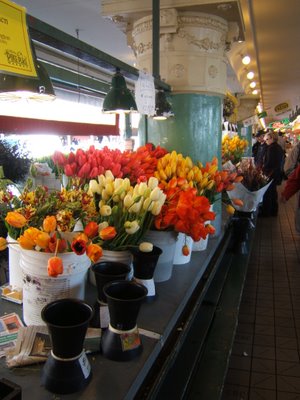
So my second trip to Seattle turned out to be rather short, but it was still successful. My inlet (HO2/RO2) hadn't been working for 2 1/2 flights, and on Saturday and Sunday we managed to get it back in working order. This was a relief, specifically because of the intercomparison that was done during the transit flight. Because we had a hard down day on Friday, I even got to have a day off, during which I went back to the Pike Place Market - and this time I got to see it "in action". Keep in mind that the two main features of the market are flowers and fish. The crab is a dungeness crab - a VERY tasty little guy - I like it more than lobster.


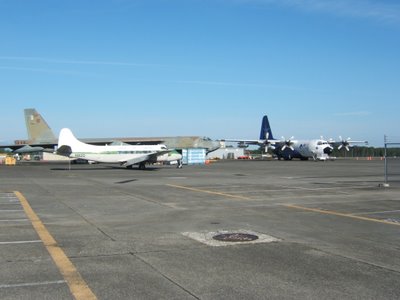
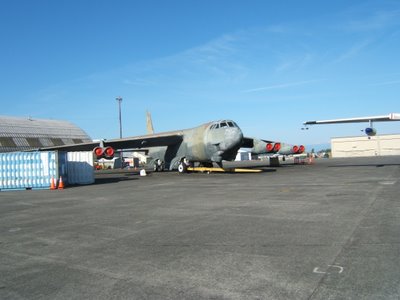
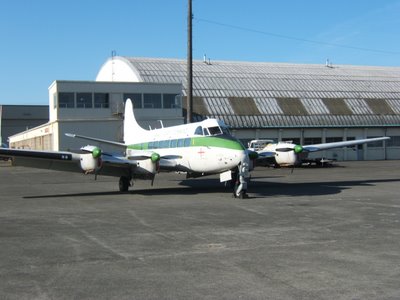
I also took a few pictures of Paine Field, where the C-130 lived for the last month. It was on a ramp next to an old B52 and a plane that used to be the Queen's. This is why it has 4 props even though it was fairly small. The B52 is just a behemouth... 8 jet engines, a HUGE bomb bay (that you can duck into and stand up inside, if you're so inclined), and wheels on the ends of the wings.

Friday, May 05, 2006

Seattle revisited...

I forgot to take the USB cable for my camera to Seattle - which means that I wasn't able to share any photos until now. I've also recently uploaded all my recent pictures to the easypix site (contact us if you don't know how to get to them) from Mexico, Seattle, and from the in-between-time when B was visiting.


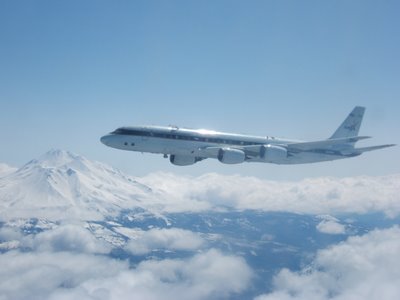
This is from the ferry flight from Boulder to Seattle when we intercompared with the NASA DC-8. They were significantly closer to us this time. This was somewhere in California.


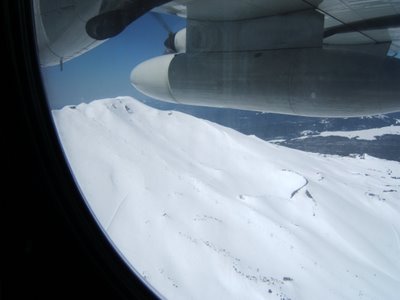
This is from a fly-by we did of Mt. Bachelor (~9000') in Washington. There is a research station at the top of the chairlift, which you can JUST make out on the left side of the photo - just below the summit.

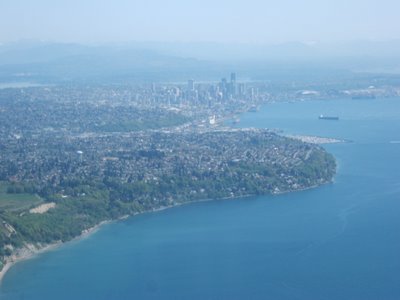
Downtown Seattle, from somewhere over Puget Sound.

And of course, some touristy things...

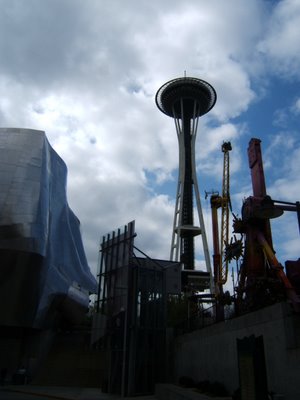
The Space Needle, although we didn't go up. We have the C-130 to see Seattle from above.

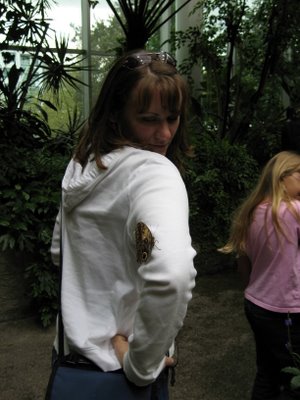
At the butterfly pavilion in the Science Center (sic) where I found my inner child again. What's the first thing four scientists do when they explore a new city? I know - let's go to the science center!

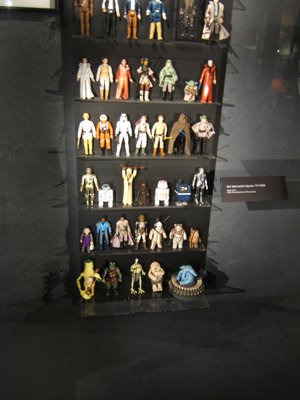
Covert shot of the original Star Wars toys at the Science Fiction Museum - I was in true geekdom heaven there.

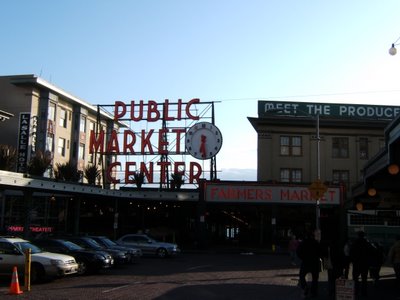
The Pike Place Farmer's market - sadly, it closed just as we arrived.

Friday, April 28, 2006

Seattle

So here I am in Seattle… I’m actually in the plane right now running a calibration, and I thought that since I am up to date in my data reduction (from the last 4 flights), and that I’ve finished what my boss wants me to do for my performance assessment that I would pass the time while I wait for my calibrations by writing something for our somewhat neglected blog.

Seattle can be a rather pretty place when it's not gloomy. We've been fortunate that we haven't had more than one day of rain so far - I attribute that to the fact that I bought raingear soon after arriving, but more for the cold than the wet. This is my first time in Washington, which means that I’ve got one more state, although I’m afraid I’ve lost count of how many I’ve got now. I think it’s somewhere around 34, although it depends how you count them. (I include the three states where I’ve only been in airports, and I also include D.C. - although it really isn’t a state, but it is a separate entity - which goes against some people’s rules.) Anyhow, I didn’t expect to see quite so many mountains here in Seattle. The mountains are a lot further away here than they are in Vancouve. I guess it’s more like Surrey, where you can see a whole mountain range off in the distance. Here, however, there are ranges on almost all four sides - the cascades go from the north to the south on the eastern side of us, and the Olympians go to the north and south off to the west. They’re much more jagged and craggy than the mountains in Colorado, and it seems strange to not see foothills in the foreground. They’re stunningly beautiful from the ground as well as the sky. A few days ago we flew a flight track that took us by Mt. Bachelor for a fly-by of the peak which was pretty fun. There is a research station near the peak so the idea was that we could intercompare with them by getting really close. The best part was that we were told the previous day on the flight plan to “be sure to bring our cameras.” The best part was that the flight was only to be 4 ½ hours long - it felt more like a scenic outing than a research flight.

Sunday was our first hard down day, so I took the opportunity to do something I haven’t done in a long time: I went to Canada! I haven’t been on Canadian soil since May 25, 2005, so it was nice to go “home”. After a quick drive up I-5, a colleague of mine and I were crossing the border, and soon after that we were in Vancouver. We didn’t do anything really special up there – the two touristy things that I’d thought up were really expensive (who wants to pay $30 to catch a lift up Grouse Mountain?!), so instead we met up with my good friend Pete, had lunch at this fabulous little Panini place, wandered through the market on the Quay in North Vancouver, and drove Pete back to Surrey. The best part? We stopped at Tim Horton’s and had coffee – my first Tim’s coffee since the morning of May 25, not including the ones that I made from the can that Brenda brought us last month. I miss my Timmy’s. It was good to see things hadn’t changed too much, but I was weirded out by the TV screen mounted up in the menu area perpetually churning out Tim Horton’s images.

I’ve got 5 more days to go until I get to go home for a week. If it’s anything like the last week and a half, it’ll go by quickly and without a lot of fanfare. Hopefully between now and then I’ll actually go INTO Seattle – we’re living in suburbanland in a community north of Seattle called Lynnwood, and we work out of Paine Field base in Everett. Lynnwood is I’m sure a very nice place, but the hotel that we’re staying in is surrounded by large stores such as Best Buy, Famous Footwear, Nordstrom Rack and Babies R Us. Within a 10 minute walk we have a huge mall, surrounded by a number of chain restaurants, but thankfully there are a few that aren’t chains. (I’m not a snob about chain restaurants, but if I’m going to eat out in a different city, I want to eat something that I can’t get everywhere else in North America.)

Paine Field is where Boeings are built in what *used* to be the world’s largest building by volume – not the VAB, surprisingly. Evidently, there is a new building that has taken over that title. Nevertheless, it’s a rather old airport, and I’m not even sure there are commercial flights that take off from here. We don’t have a hangar, so the cold, wet, damp Seattle mornings are not too friendly to us when we have to work outside, but it’s been warming up during the day. We are parked on a tarmac right beside on old derelict B-52. It has 8 jet engines, wheels on the tips of the wings, and you can actually go stand up inside the bomb bay – not that we’re supposed to be doing that. A couple days ago some of our mechs were standing on ladders and peering into the windows like little children at Christmastime.

Thursday, March 30, 2006

Haze

Uno mas dias.

We flew our last research flight here in Mexico yesterday, and it was a banner flight for many instruments. One of the people on board measures SO2, and he reported a concentration of 300 ppb at one point as we flew over a refinery just south of Mexico city, and later he figured that it might be closer to 500 ppb after he did a calibration. This is very VERY high! CN spiked at the same time, as did sulfuric acid, and we could even smell the pollution in the cabin.

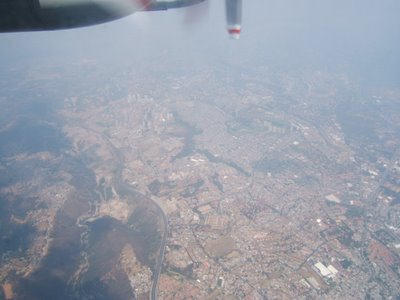
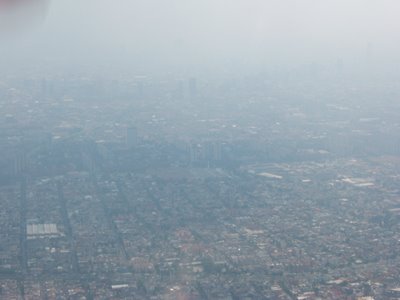
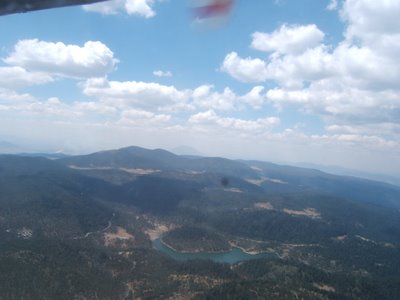
I got some great pictures that show the pollution really well:


Here you can see the haze that obscures the mountains in the background, as well as the contrast between it and the blue sky above. Just below the clouds is the massive layer of pollution that we were approaching.

Now we're over Mexico city, and we could barely see the ground due to the pollution. Just below us the ground was somewhat visible, and a little further away was almost completely obscured.

Here we are not far above the downtown area, and you can JUST make out the skyscrapers in the upper half of this photo.

And finally, contrast that against this last picture, where we are out of the pollution to the east of Mexico City, and can actually see a few layers of mountains off in the distance.

So today I am packing up both my personal belongings and our equipment for the shipment home. I am to fly on the ferry back to Jeffco in Boulder, which means that I don't need to get up at 0400 for the 0700 departure on the once-daily Continental flight that goes through Houston. Ours is a direct 4 - 5 hour flight, mostly at altitude, with only some of the instruments running due to a very short 15-minute preflight warm-up. Then I have two (2!) weeks and two days before I ride the ferry up to Seattle for INTEX-B. I'd better get packing...

Tuesday, March 28, 2006

Sunrise

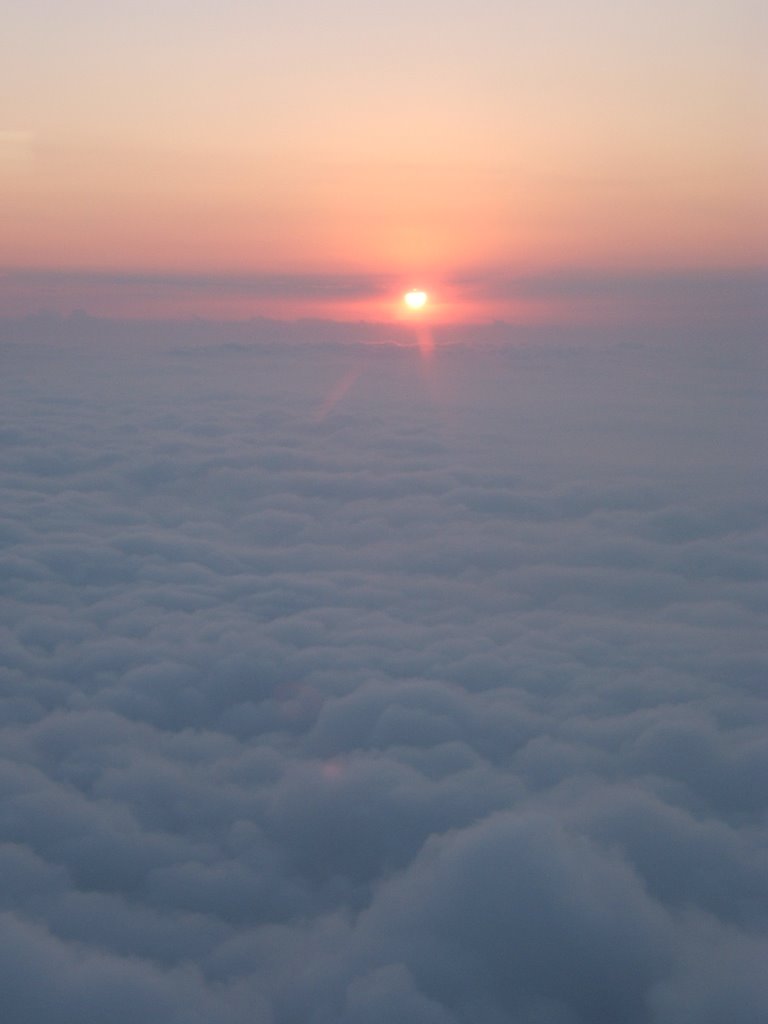
I got to see sunrise this morning from 9000 feet, just above a layer of fluffy clouds. Of course, that meant that I was awake REALLY early. We had an early morning flight with a takeoff time of 0400 local time, which meant that we had to be at the plane at 0300, which meant leaving the hotel around 0230, which meant getting up around 0200. And somehow I'm still awake. The crazy part is that not only did I get up at 0200, I was awake at 2300 last night for over an hour because I had a harsh fever. I have no idea what my temperature was, because of course my thermometer is at home in Boulder. Regardless, I've had a cold for a few days, mostly in my throat and yesterday it found my sinuses. I had a mild fever on and off yesterday, but it hit me hardest a couple hours after I went to sleep. I was almost resigned to having to miss the flight (very intersting from a radical point-of-view, or so I thought going in) when I fell asleep around 0030 this morning. But when my alarm woke me up at 0200 I was in the middle of my fever breaking and I figured I could muscle through. As it happened, by about 0500, I was feeling great!

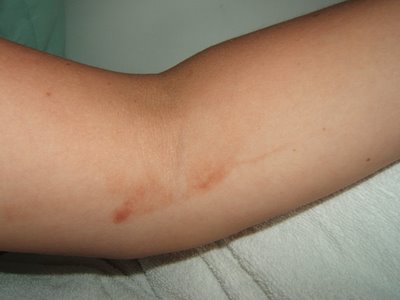
Getting ill in a foreign country isn't much fun. It's not terrible when you've got a lot of colleagues who are all outfitted with Tylenol Cold, Advil Cold and Sinus, and Sudafed Non-dowsy (where is that trademark symbol when you need it?) And really, a cold isn't that big a deal - just give me some nice soft tissues and I'll be happy. What I'm more concerned about is the streak that I have in my elbow. I noticed it not long after arriving here in Mexico, and it has pretty much stayed the same. (That means that I'm pretty sure it happened here, but not positive.) I would have expected it to darken, or lighten, or do *something*, but no: it's the same. The only thing that has changed is that the little red spot on the left (see the picture) used to be more of a raised bright red spot, like a bug bite.

Anyone have any idea what this could be? I've looked it up, and I'm pretty sure it's not Lyme disease, and I'm also pretty sure that I didn't get bitten by a brown recluse spider, although really - I'm not a doctor and I don't really have the best knowledge on these matters. I do know that I had strange pains in my left arm a couple days ago, and that I have had a couple instances over the last week where I have felt a tightness in my chest, like I've been having trouble breathing. I'm trying to not be too freaked out about that. After all, there is a lot to be said for what we go through on the plane - I've almost gotten accustomed to the feeling of "not having your land-legs back" that always hits me about an hour after we land. It's a sudden buzz-like sensation where the world starts to vibrate just a little, and you can't catch up. It lasts anywhere from a half hour to a couple hours, and then goes away without much fanfare. Considering how much we're jostled about on the plane, it's not terribly surprising.

Friday, March 24, 2006

Routine

As of tomorrow, I will have been here in Mexico for 2 weeks, and it has gone by really quickly. My days consist of either "no fly days", where we are given access to the plane for 8 hours and allowed to work on the instruments, "fly days", where we are given 3 hours to do preflight preparation (and work on the instrument, where necessary, given that we can't tear things apart too much) and then anywhere from 6 to 9 hours of flights, and "hard down days", where we aren't given access to the plane, and we ARE given access to tour around, relax by the pool, go shopping, etc. Evenings usually see us in either the local taco bars, the 100% Natural restaurant (just think "Boulder food"), an Italian joint with amazing seafood dishes, an Argentian steakhouse - most expensive by FAR, or a few other haunts that have been scoped out time and again for good food. The locals usually eat around 8 or 9 PM, and we have also settled into eating at a similar time, partially due to the workload, and partially because it just seems to fit.

I'm just coming off two consecutive fly days, and I got a few pictures that are worth sharing:
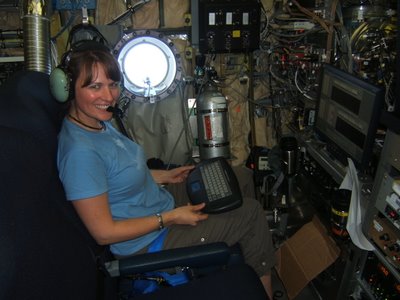

So here I am in my seat... ambient temperature ranges from about 30 to 35 degrees C, and the air coming out at my feet ranges from about 35 to 43 degrees C. That's the reason for the piece of very technical cardboard that is taped to the rack at my knees. Our keyboards are handheld, which doesn't make the aircraft guys very happy - they prefer to have everything strapped in. Hence, we have to stow them for takeoff and landing. It is VERY loud on the plane, and although I can get by with no ear protection, we are almost always wearing these noise-cancelling headsets. They're more for communication than anything - we have a number of channels to talk to either everyone, or a few people, or just the people hooked into our station, but most of the time my co-workers and I just wear our headsets a little off one ear and we shout to each other so that we can stay connected to the rest of the scientists on board, and more importantly to the mission scientist who lets us know when we're going to change headings and/or altitudes.
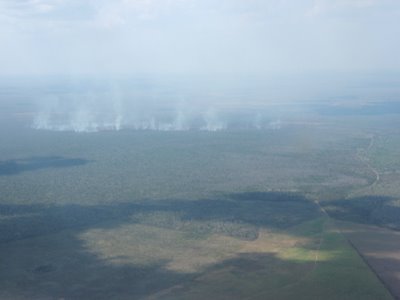
Yesterday we flew over the Yucatan, and one of the main things that they've got going for them down there are constant fires. Here you can see both the fire burning down below, as well as the smoke and haze that are created as a result.
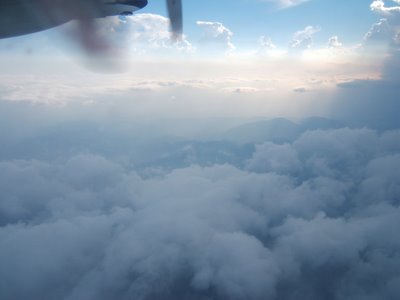
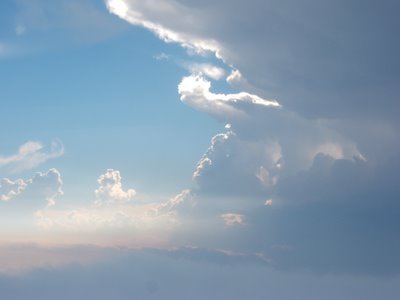
We has some pretty spectacular clouds to view yesterday, too. These were from near the end of our flight, just before we had to turn around to avoid a pretty nasty thunderstorm. Fortunately, the thunderstorm was not in Veracruz where we were headed. Our landing, though bumpy, wasn't that bad. It's hard to see, but in the first picture here there are rows of mountains below us.
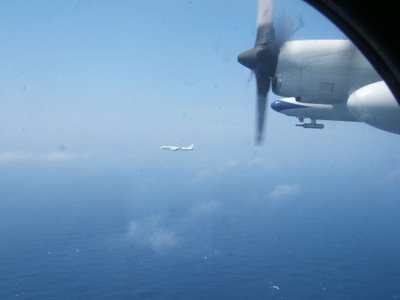
This was actually from Sunday, when we did our last intercomparison with the NASA DC-8. The two planes fly "wingtip to wingtip" (from this far apart) and we are essentially sampling the same air so that we can compare our two instruments. The DC-8 is a much larger and longer range plane than our C-130, but it has a similiar suite of instruments, so it is worthwhile comparing their results. They were based out of Houston, but they've already started their downtime in preparation for Intex-B, which is the project we're involved in that starts in mid-April.
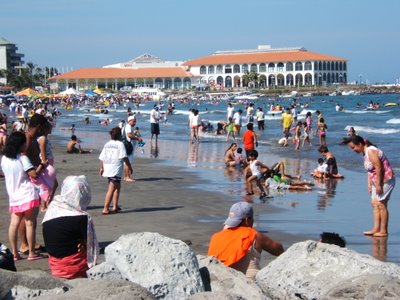

This is from the last "fly day" that I didn't fly. Instead I "toured around" and got to go check out the local beach. No, I didn't go in. There are very questionable practices of local businesses dumping their sewage into the gulf here in Veracruz, and it's not recommended that we foreigners go swimming in the ocean. There are many people who do, and we admire their... uh... constitution.

Monday, March 20, 2006

Bust

I've coined a new phrase for our instrument. It's the "NCAR 4-channel CIMS", but I've decided that it is essentially the "NCAR 2-out-of-4-ain't-bad-channel CIMS". Although yesterday, we were only operating at 25%, so I guess that wasn't "not bad".

I had my first complete bust of a flight. We had back-to-back fly days, which are interesting scientifically when everything is working, but there were some contamination issues in the HO2 inlet on Friday, and although we changed some of the most contaminated lines, the flight on Saturday proved that we hadn't done enough and it was necessary to pull the inlet off Saturday night, bring it back to the hotel, and wash the entire thing in a sink in my room here at the hotel (all 100+ pieces, ~80 of which of are o-rings and screws.) Then, yesterday morning the plan was to get to the airport 3 1/2 hours before the 11:30 flight and put the thing back together... well, it was a good idea in principle, but there just wasn't enough time. My boss and I were describing it last night to another colleague (the one who's rack is right behind us in the aircraft, and essentially breathes hot air down our necks) during dinner that there are essentially about 40 things that can easily go wrong with the inlet when you're putting it back together, and about 10 of them are obvious ones. This time it wasn't one of the obvious ones, and we were in a mad panic (big adrenaline rush) to put the thing back together just before the flight, with the flight crew watching us sideways from about 09:30 right up until 10:55, when we finally put our pylon back on (the cover over the inlet.)

We managed to get most of it to work, but there is still a fundamental problem with it, and as a result I measured about 8 1/2 hours of background HO2 and RO2. (sigh)

Today we have a hard down day, my second since I arrived down here, and as a result the inlet will have to wait until tomorrow before I can address it. We're not flying until Wednesday, though, so I'll have all day tomorrow at the plane. I just hope it'll be enough for me to get things working before the next flight.

In other news, I'm sadly stuck here in Mexico today on Keith's 34th birthday. Happy birthday, my sweet husband. I miss you. Everyone else, please be good to him. He's embarking on 2 weeks of single parenting, now that his mom and Aunt Jill have flown back to Toronto. And while we're on the topic of Keith's birthday, happy first day of spring, Christian.

Thursday, March 16, 2006

Public Relations

06:20

Today I am going on my first flight here in Mexico. We’ve had two days of working on the plane from 8 until 4, fixing minor issues, troubleshooting others, and running calibrations so that the data that gets generated is as accurate as possible. It’s been both hot and humid, but still bearable. A portable A/C unit with a 6” hose pumps cold air into the back of the plane, but it is debatable whether or not that affects those of us in the front when all the rear doors are open. At least it’s a nice cool place to go stand. Truthfully, I’ve been working on the outside more than the inside, setting up calibrators and fixing inlet problems: standing on a ladder or sitting on the ground in front of a rolling instrument rack box. All this makes me a little more visible to the press.

Each day there have been people from the local Mexican media coming by to interview, photograph and film us working. I’ve been both photographed and filmed while working on the outside of the plane at our pylon, which is likely one of the more interesting-looking parts of the plane. As one of only a few women working in and around the plane, I’m hopeful that a depiction of women doing this kind of work will help to continue to change the mindset about gender roles in science.

Unfortunately, one of the first publications printed soon after the plane arrived here two weeks ago allegedly said that a group of American scientists were in Veracruz to show how badly polluted it is here in Mexico. Not exactly the spin we were looking for. I thought it might be wise, therefore, to give a quick explanation of exactly WHY we’re here, and since it’s early and this is from my memory, please don’t quote me on the precise numbers:

In atmospheric chemistry, a lot of research has been done studying the air in remote, less-polluted atmospheres: polar regions, over oceans and in remote forests, where the chemistry is easier to understand and predict. Far less research has been done studying the chemistry of highly-polluted urban air. Currently there are approximately 10 megacities (cities with populations greater than ten million people) in the world. Some of these cities are in the US, but many of them are in less-developed nations. Over the next 20 years, the number of megacities in the world is expected to more than double, again with most of the megacities in less-developed nations. Mexico City happens to be a megacity that is close to the US, and thus logistically reasonable for a measurement campaign. What we are primarily interested in with Mexico City is what is happening in the air that leaves Mexico City: 1 day, 2 days, or even 3 days later. Under certain predictable and somewhat regular conditions, both satellite measurements and models have shown large concentrations of carbon monoxide exiting the city and moving to the northeast. The processing or aging of this “plume” is what we are studying. For instance, today we will be flying north from Veracruz and then making east-west tracks across Mexico north of Mexico City to measure a cross-section of this plume as it is moves out to the Gulf of Mexico. Combined with other aircraft and ground-based research stations, we are hoping to learn more about the driving factors associated with the chemistry of this urban plume.

Present:

I wrote the above this morning and tried to put it up on the blog, but thanks to the incredible demand for bandwidth here at the hotel, I was unable to do so. I've since been on that flight, and it was pretty incredible. Our rack puts out an unbelievable amount of heat, as does the rack right behind our seats, and halfway through the flight I pulled out a voltmeter and thermocouple and measured the temperatures around us. The air around my seat was about 38 deg C, and the air coming through the fan below my knees was 43. No wonder I was feeling rather warm...

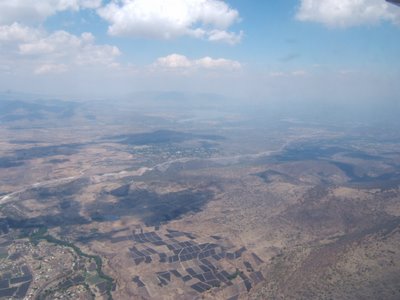
So here is a little treat from our travels today. This is from somewhere southeast of Mexico City, taken as we were flying back across Mexico to Veracruz (the time-to-go-home! leg) :

Monday, February 20, 2006

The Chaos of Science


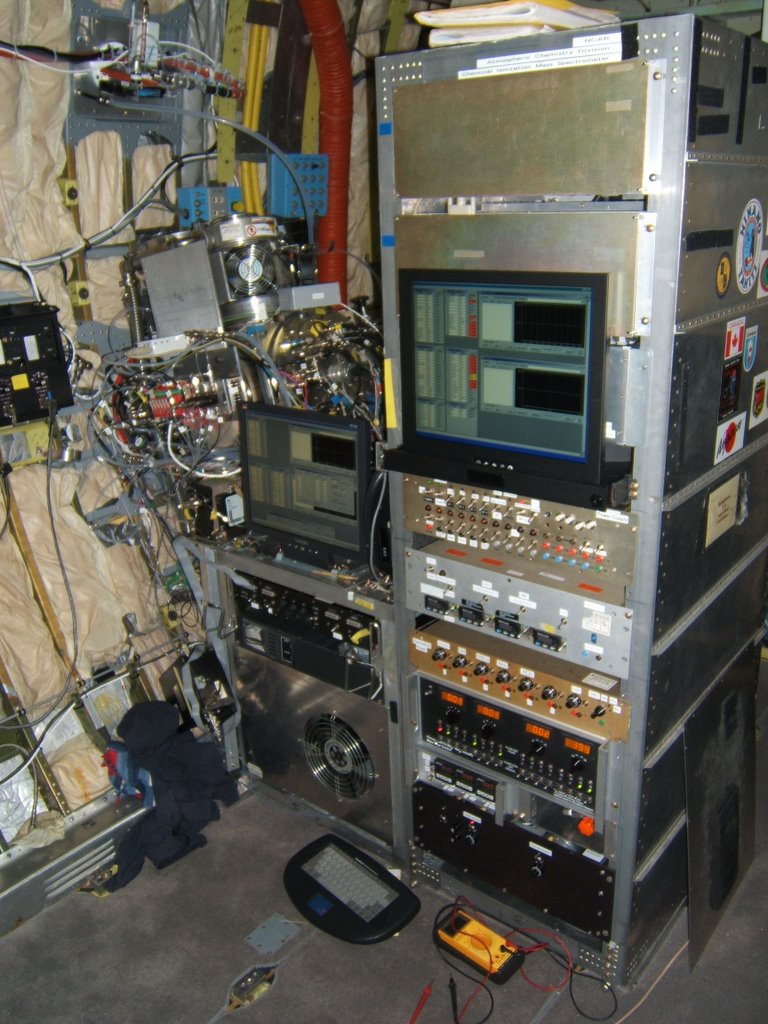
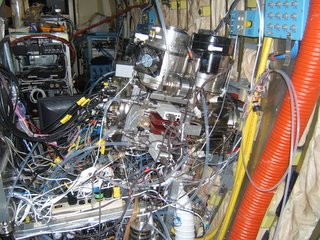
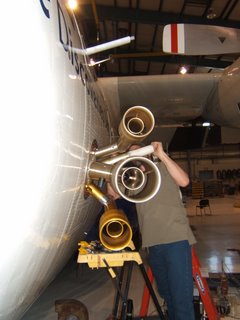
I took some pictures today at work that I thought I would share with the group. These are pictures of the instrument that I'm helping to upload (install) and make ready for our two field studies. It's the 4-channel chemical ionization mass spectrometer (CIMS) that can measure a whole suite of gas-phase molecules and radicals that I described in a previous post (Time flies when you're busy.) It's pretty crazy to look at, and we've garnered more than a few comments from the other investigators along the lines of "they're actually going to let you fly that?" The "they" in question are the crew in charge of all things aviation. And the answer, miraculously (and by a small degree of history), is yes.

The interior pictures are of the CIMS instrument, both from the aft of the rack, and the front. Yes, all those lines are actually necessary. The one with the keyboard on the floor is the aft picture, and there will be two seats put in tomorrow morning. The seats go in and out depending on what the guys in the rack behind us need to do. There are also a couple pictures of the exterior, showing the pylons that cover our inlets. Mine (and my boss's) is the one that doesn't look like a bazooka. They're all designed not to interfere with each other. The ones that face forward are designed to smooth out the flow, while at the same time being 10 degrees off axis so that any liquid water in the air will collide with the sides and not enter the inlets.

Monday, September 12, 2005

Home again, home again...

I'm home... Perhaps some of you didn't know I was gone? Well then - let me fill you in:

Last week I had the incredible privilege of being picked to be a part of ACCESS VIII and the GRC, which respectively stand for "Atmospheric Chemistry Colloquium of Emerging Senior Scientists" and "Gordon Research Conference". The former is an opportunity for recent and soon-to-be recent PhD graduates in atmospheric chemistry-related fields to meet together, discuss our research, socialize and schmooze with a number of US agency reps (read: NASA, NSF, DoE and NOAA big-spenders) for three days prior to the Atmospheric Chemistry GRC, which happens immediately following ACCESS. These happen every two years, with the last two GRC meetings (2003 and 2005) taking place at Big Sky in Montana, and ACCESS in Yellowstone Park (Wyoming). For the record, I owe a huge thank you to my good friend Alex Thompson, who attended both ACCESS and the GRC two years ago and basically insisted that I apply this year. Cheers, Alex!

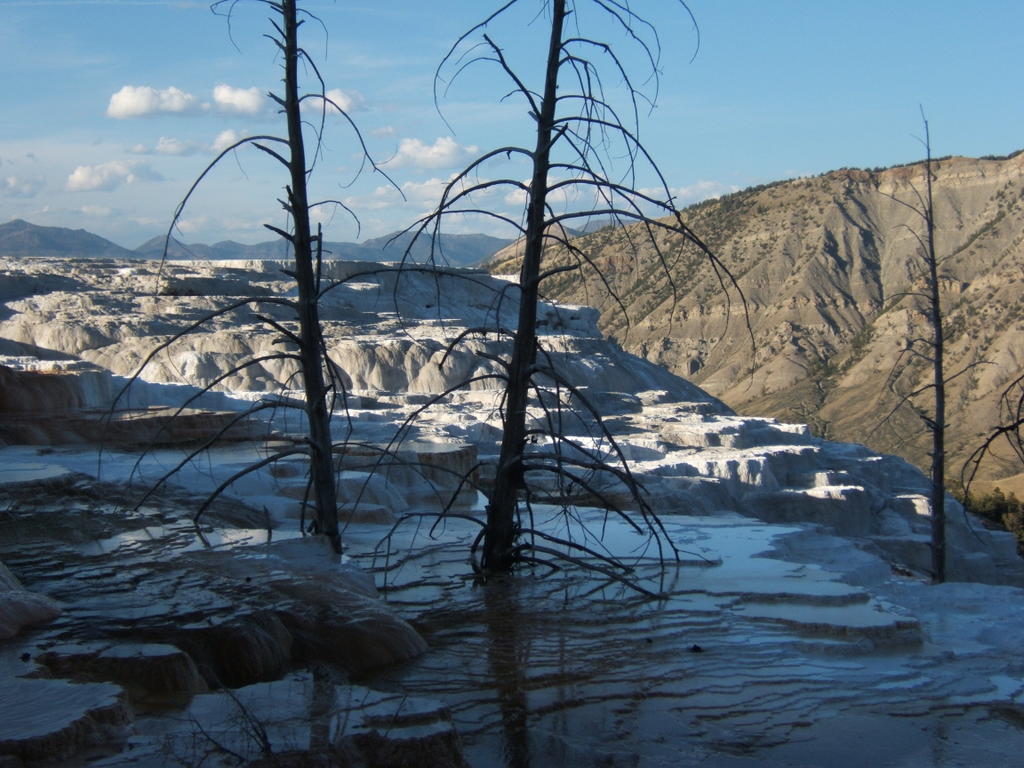
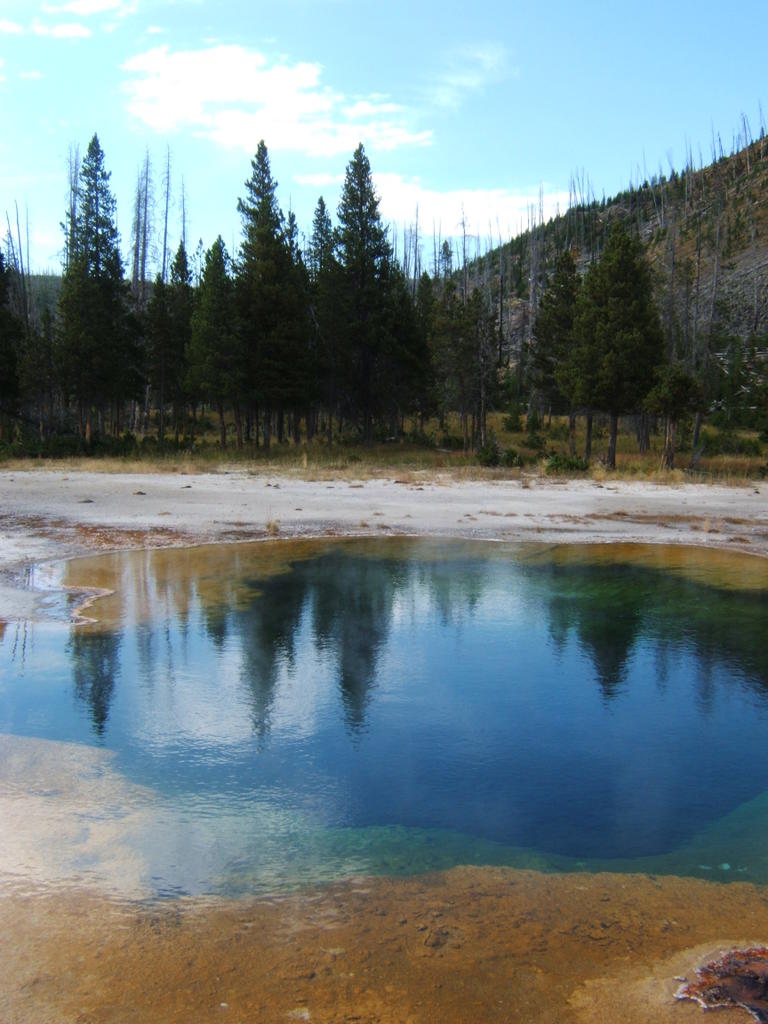
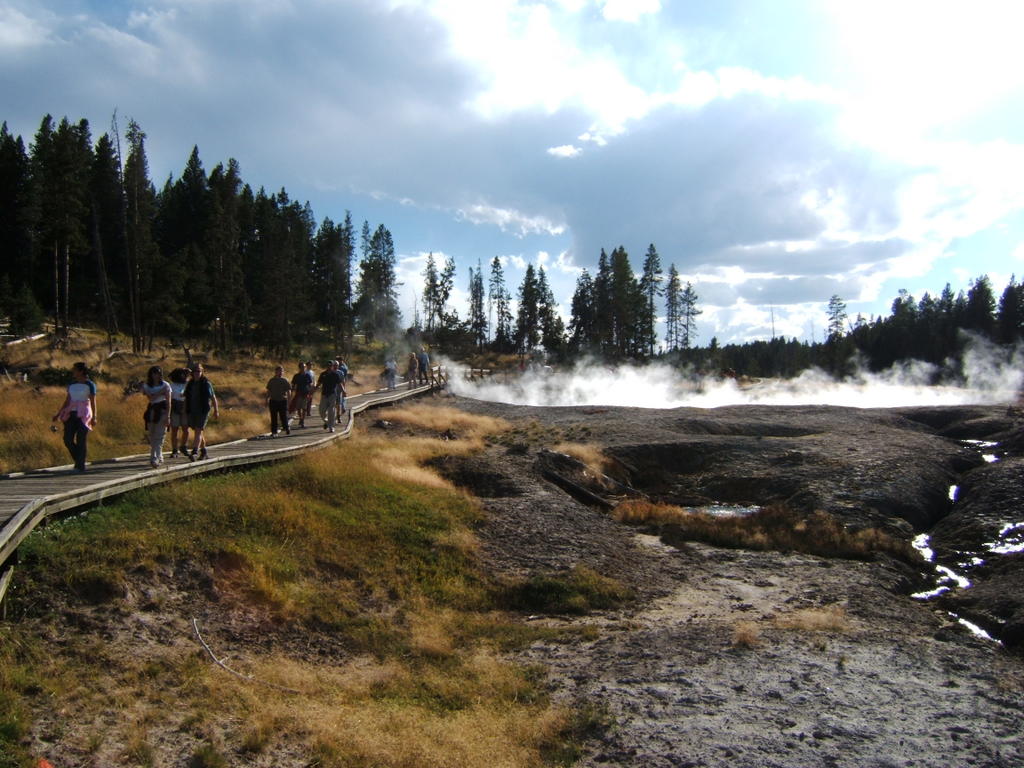
I've never been to either Montana or Wyoming, and I was absolutely in awe... Yellowstone is beautiful (all three photos shown here are from Yellowstone Park), and has an incredible number of stunning and amazing sights and wildlife. I really can't do them justice to describe them, but if you're interested, you can check out the rest of my pictures on the Shoppers site (along with some lengthy descriptions.) A warning - there are a LOT of pictures... my apologies to those of you with slow internet access.

The truth is, I don't know which was more exciting - ACCESS and Yellowstone or the GRC part of the week. The format of a GRC meeting is such that I not only got to listen to some of the best and brightest in our field during the morning and evening sessions, but because we are a relatively small group (conference-wise, at ~160 people), eating, sleeping and living in an environment not unlike a high school youth retreat, there were numerous opportunities for interaction with more established scientists throughout the week. As members of ACCESS, we were like the "new elite", and thus we garnered almost as much attention as those giving talks. The conversations over dinner often broke out into scientific discussions of the state of the world (and our futures), sometimes even in the absence of "current" senior scientists...

It occurred to me today while I was reading my friend Rhian's blog that many of you probably don't really know what it is that I and other atmospheric chemists actually do with our time. She explains it much more eloquently than I can, but essentially, we study the gas-phase and aerosol (gas-liquid and gas-solid) chemistry that occurs in the complex mixture of the atmosphere.
There are two major foci for current research: climate change and air quality. The first talk of this year's GRC contrasted the issue of climate change to the Antarctic ozone hole. Unlike the relatively straightforward job of assessing the causes and establishing a workable solution to the ozone hole issue, the difficulty of interpreting and reporting on climate change is that it isn't as easy to identify direct causes, model anthropogenic v. natural impacts, and develop a reasonable plan for what we can do to stop the impact we as humans are having on our world. Climate change is more than just the greenhouse effect. It involves such a vast array of factors that are barely understood (if at all) and much more difficult to model than the ozone issue ever was. Is it happening? Definitely... Why? Well... on a basic level, it has to do with what we (humans) are doing to our atmosphere that is causing our climate to change at an seemingly unprecedented pace. What can we do to stop it? Hard to say. I think it's even harder to implement. Just ask the people in charge of Kyoto.

As for air quality, atmospheric scientists are mostly concerned with the increasing number of megacities (> 10 million people) - only 4 in 1975, currently 16, and 20+ by 2015, mostly in less-developed nations. Problems such as ozone (near the surface, ozone is bad, in the ozone layer in the stratosphere, ozone is good - I know, it's complicated), fine particulate matter and NOx are some of the the bigger issues in urban air - typically related to adverse health effects. This is the focus of my current research, as I prepare for a field study that will look at impact of the urban outflow (polluted air) of Mexico City as it is transported into the surrounding regions. As chemists, we are looking at the major factors involved in the chemistry of this polluted air mass, to determine the impact it has downwind of Mexico City. Perhaps someday this work will help us to better understand the complex chemistry of urban air in such a way that it will enable policy makers to do their jobs more confidently.
It certainly is an interesting ride. We don't have all the answers. If we did, I wouldn't have a job. For now, I'll keep toiling away in my corner of the field, feeling a little more confident that what I'm doing can fit into the big picture and maybe someday make a difference.